Image














The Student Services Language Testing team was recognized nationally for using language proficiency data to strengthen communication with families and support English learners. Featured in a national case study, the team shares how educators use preLAS Online data to explain students' language development needs and strengthen partnerships with parents.

The following is the text from the DRC case study featuring Garland ISD.
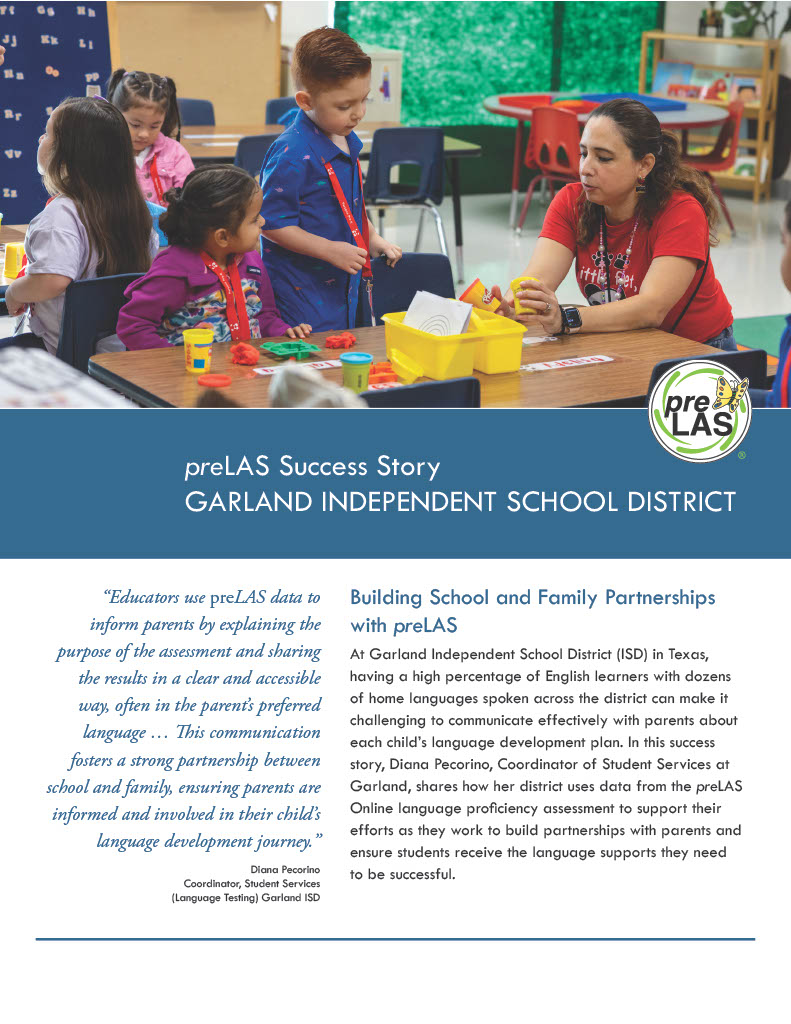
At Garland Independent School District (ISD) in Texas, having a high percentage of English learners with dozens of home languages spoken across the district can make it challenging to communicate effectively with parents about each child's language development plan. In this success story, Diana Pecorino, Coordinator of Student Services at Garland, shares how her district uses data from the preLAS Online language proficiency assessment to support their efforts as they work to build partnerships with parents and ensure students receive the language supports they need to be successful.
"Educators use preLAS data to inform parents by explaining the purpose of the assessment and sharing the results in a clear and accessible way, often in the parent's preferred language … This communication fosters a strong partnership between school and family, ensuring parents are informed and involved in their child's language development journey." Diana Pecorino, Coordinator, Student Services (Language Testing), Garland ISD.
What challenges do you have in your centers specific to language learning? We have over 70 languages and dialects spoken in our district. One of our challenges is supporting the many dialects for which we do not have print resources to use to communicate with students or parents.
Why did you select preLAS Online, and how is it used in your district? preLAS is our standardized test for the state of Texas, and is used as an identification assessment for students qualifying as Emergent Bilinguals in both English and Spanish. It is also easy to use, and the play format is age-appropriate for students.
Which preLAS Online features are particularly important to your district? How do they address specific concerns and needs? Due to the large amount of language testing that is done, our team does all the testing for students entering the school district. Our testing advisors assess our students and use the data to give parents the options of various programs in one of our 45 elementary schools. This allows for parents to prioritize language programs and ensure their children will be receiving the language supports they may need from an early age.
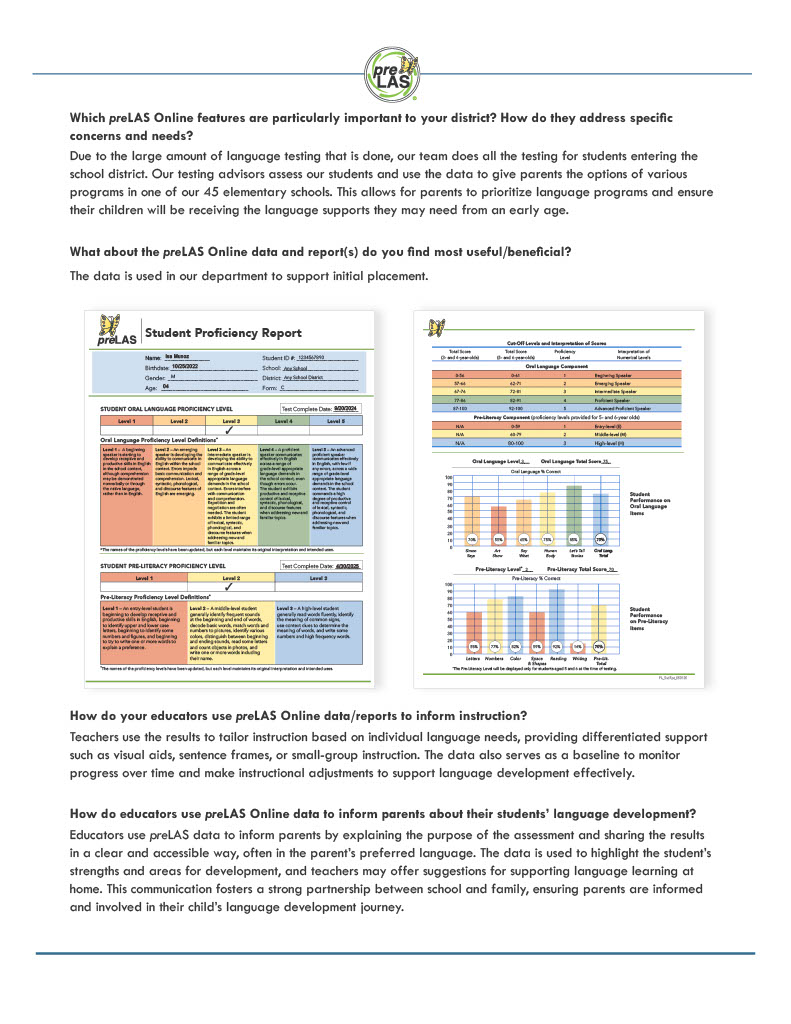
What about the preLAS Online data and report(s) do you find most useful/beneficial? The data is used in our department to support initial placement.
How do your educators use preLAS Online data/reports to inform instruction? Teachers use the results to tailor instruction based on individual language needs, providing differentiated support such as visual aids, sentence frames, or small-group instruction. The data also serves as a baseline to monitor progress over time and make instructional adjustments to support language development effectively.
How do educators use preLAS Online data to inform parents about their students' language development? Educators use preLAS data to inform parents by explaining the purpose of the assessment and sharing the results in a clear and accessible way, often in the parent's preferred language. The data is used to highlight the student's strengths and areas for development, and teachers may offer suggestions for supporting language learning at home. This communication fosters a strong partnership between school and family, ensuring parents are informed and involved in their child's language development journey.
Is there anything else you would like to share about your experience with preLAS? The preLAS assessment is age-appropriate in not only assessing students’ language needs but also a great, fun introduction to school for all students.
View the DRC preLAS Garland ISD Case Study.